Osteopathy - making structure function
How it started.
Osteopathy was developed by Andrew Taylor Still in America in the 19th Century as a holistic system of healing and brought to Britain by Dr JM Littlejohn. Dr Still was a frontier doctor who saw much suffering amongst the pioneering settlers and in the civil war. When he lost two of his children to disease he became dissatisfied with the conventional medicine of the time and, through his study of anatomy (structure) and physiology (function), concluded that there was a relationship between the two. He developed osteopathy as a means of working directly on the structure of a person so that their function would be improved.
Osteopathy and holism
Osteopathy has a reputation for dealing with back and neck pain; and while it does this very well it was originally developed as a drugless system of medicine.
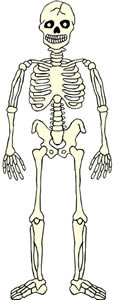
One of it's main principles is that a person is a unity (mind, body, spirit) and osteopathy addresses all these aspects through structure. Put simply, if the musculo-skeletal structure is balanced and functions well then other aspects of a person might improve.
In everyday life our bodies (structure) are continually adapting to the demands that we make on them. They do this automatically, however, sometimes stress overcomes the reflex corrections that the body tries to make and this presents as pain and loss of function.
In this situation osteopathy can be an appropriate treatment to help resolve the stresses held in the body and help to make structure function again.
What osteopaths do.
We use a number of techniques to work on the body. In particular, I tend to use the following :
- articulation of joints - to restore mobility
- stretching of tight muscles to restore a more appropriate tension
- Manipulation of joints to restore joint mobility.
- "inhibition" of muscles.
- Functional techniques, including "balanced ligamentous tension".
There are also other techniques that I use when appropriate, including visceral work, Muscle Energy Technique and fascial unwinding. Please ask me if you would like to know more.
What we treat
Basically and pain and restriction in the body, including back and neck pain, whether brought on by poor work position, overgardening or any other cause.
Who we treat
All ages, from babies to more mature adults.
What happens in a treatment?
At the first consultation I will take a thorough case history relating to your problem and any previous complaints. An examination will then be made of the problem area and any associated areas. After examination a diagnosis will be reached which will be discussed with you, and treatment will then start using techniques most appropriate to the person and the complaint. Very rarely, referral may be made to your GP if a problem needs further investigation.